Introduction to GraphQL
Learn the core concepts of GraphQL, why to use it and how it differs from REST.
What is GraphQL?
GraphQL is an open-source query language for APIs and a server runtime for fulfilling those queries.
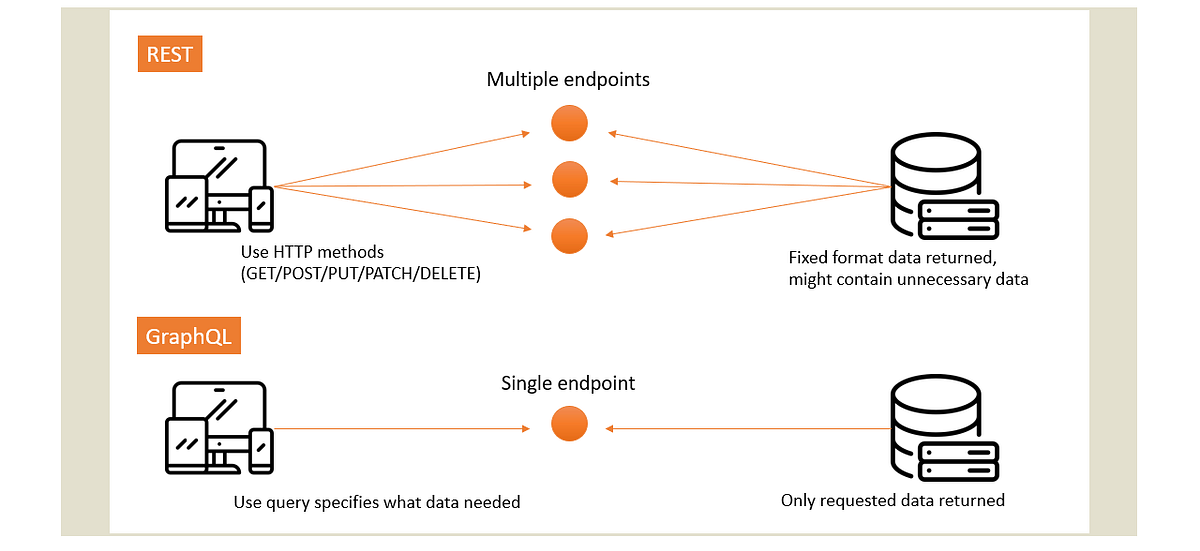
Unlike REST, where you might need to hit multiple endpoints to gather related data (over-fetching) or receive large JSON blobs with fields you don't need (under-fetching), GraphQL allows you to fetch all the data you need in a single request.
GraphQL isn't tied to any specific database or storage engine - it is backed by your existing code and data.
The core idea
In practical terms, GraphQL comprises two separate parts:
- GraphQL query language - specific language that enables API client to specify their intent, such as what data to query, which action to perform...
- backend service able to execute the above requests
The high level flow is usually something like:
- Client sends a GraphQL query
- Server validates it against a Schema
- Resolvers fetch data from sources like databases, REST APIs...
- Server returns JSON shaped response containing only the requested fields
Explain it using REST
As most developers are already familiar with REST APIs, I find it easiest to explain GraphQL just by drawing a parallel with a similar REST API.
Let's imagine we want to build a website showing some info about movies. We would like to display a page that lists movie name, year it was released, some reviews and some awards the movie received or has been nominated for.
In REST, we could model this something like:
GET https://movieDB.com/movies
[
  {
    "id": 1,
    "title": "Star Wars: Episode IV - A New Hope",
    "genre": "Adventure Epic",
    "releaseYear": 1977,
    "durationMinutes": 121,
    "originalTitle": "Star Wars",
    "summary": "Luke Skywalker joins forces with a Jedi Knight, a cocky pilot, a Wookiee and two droids to save the galaxy"
  },
  {
    "id": 2,
    "title": "The Matrix",
    "genre": "Cyberpunk",
    "releaseYear": 1999,
    "durationMinutes": 136,
    "originalTitle": "The Matrix",
    "summary": "Neo discovers the shocking truth--the life he knows is the elaborate deception of an evil cyber-intelligence"
  }
]

GET https://movieDB.com/movies/reviews?movieIds=1,2
[
  {
    "id": 111,
    "movieId": 1,
    "rating": 9.5,
    "title": "Visually stunning sci-fi",
    "comment": "The story starts slow but really pays off.",
    "userId": 42,
    "createdAt": "2024-06-12T14:23:00Z"
  },
  {
    "id": 701,
    "movieId": 2,
    "rating": 9.5,
    "title": "Life changing special effects",
    "comment": "The world-building and visuals were incredible.",
    "userId": 777,
    "createdAt": "2024-06-12T14:23:00Z"
  }
]

GET https://movieDB.com/movies/awards?movieIds=1,2
[
  {
    "id": 111,
    "movieId": 1,
    "name": "Oscar",
    "category": "Best Picture",
    "status": "NOMINATED"
  },
  {
    "id": 121,
    "movieId": 2,
    "name": "Oscar",
    "category": "Best Effects, Visual Effects",
    "status": "WON"
  }
]
This is of course a very simplified example, but the general idea is there - we need to make 3 separate requests, but also, we get a lot of fields back that we're not that interested in at the moment.
The same request in GraphQL would look something like:
POST https://movieDB.com/graphql
{
  movies {
    title
    releaseYear
    reviews {
        rating
    }
    awards {
        name
        category
    }
  }
}
That single request will return all data we need for this specific page:
{
  "data": {
    "movies": [
      {
        "title": "Star Wars: Episode IV - A New Hope",
        "releaseYear": 1977,
        "reviews": [
          {
            "rating": 9.5
          },
          {
            "rating": 9.8
          }
        ],
        "awards": [
          {
            "name": "Oscar",
            "category": "Best Picture"
          }
        ]
      },
      {
        "title": "The Matrix",
        "releaseYear": 1999,
        "reviews": [
          {
            "rating": 9.2
          },
          {
            "rating": 9.9
          }
        ],
        "awards": {
            "name": "Oscar",
            "category": "Best Effects, Visual Effects"
        }
      }
    ]
  }
}
Request flow comparison
Everything above can be briefly visualized as:
You can read a bit more about REST vs GraphQL comparison in this blog post
GraphQL Schema (the Contract)
A GraphQL service is created by defining types and their fields in a Schema, and we'll go through it in detail in a dedicated chapter, but for now, just so you have a general idea, this is how a Schema might look for the example service we defined above. Don't worry if you can't understand it, that is what we focus on in the next chapter.
"""
ISO-8601 timestamp, e.g. "2024-06-12T14:23:00Z".
Commonly implemented by libraries (GraphQL Scalars, Spring, Apollo, etc.).
"""
scalar DateTime

"""
A movie available in the catalog.
"""
type Movie {
    """
    Globally unique identifier (preferred over Int for GraphQL clients/caching).
    """
    id: ID!

    title: String!

    """
    Some movies have different titles by region/language.
    Null if identical/unknown.
    """
    originalTitle: String

    """
    Short plot description .
    """
    summary: String

    """
    Many systems allow multiple genres. Use a list for flexibility.
    Example: ["Cyberpunk", "Action"].
    """
    genres: [String!]!

    releaseYear: Int!

    durationMinutes: Int!

    """
    Reviews submitted for this movie.
    """
    reviews: [Review!]!

    """
    Awards associated with this movie (nominations and wins).
    """
    awards: [Award!]!
}

"""
A user review for a movie.
"""
type Review {
    id: ID!

    """
    Numeric rating. Scale is product-specific (e.g., 0-10).
    """
    rating: Float!

    """
    Short headline for the review.
    """
    title: String

    """
    Full review text/body.
    """
    comment: String

    createdAt: DateTime!

    """
    Best practice: represent relationships as objects.
    """
    movie: Movie!

    """
    Keep movieId for educational parity with REST/DB models, but prefer `movie`.
    """
    movieId: ID! @deprecated(reason: "Prefer the `movie` field (GraphQL relationship).")

    """
    If you have a User type, expose the relationship.
    """
    user: User

    """
    Keep userId for educational parity, but prefer `user`.
    """
    userId: ID @deprecated(reason: "Prefer the `user` field (GraphQL relationship).")
}

"""
Minimal user shape (we'll expand this later).
"""
type User {
    id: ID!
    displayName: String
}

"""
An award associated with a movie (nomination or win).
"""
type Award {
    id: ID!

    """
    Awarding body or award name, e.g. "Oscar", "BAFTA".
    """
    name: String!

    """
    Category is often free-form and varies by organization/year,
    so String is safer than an enum for real-world use.
    """
    category: String!

    status: AwardStatus!

    """
    Relationship (preferred in GraphQL).
    """
    movie: Movie!

    """
    Kept for parity with REST/DB, but prefer `movie`.
    """
    movieId: ID! @deprecated(reason: "Prefer the `movie` field (GraphQL relationship).")
}

enum AwardStatus {
    NOMINATED
    WON
}

type Query {
    """
    List movies. In real APIs, you typically paginate.
    """
    movies(limit: Int = 20, offset: Int = 0): [Movie!]!

    """
    Fetch a single movie by ID.
    """
    movie(id: ID!): Movie
}